
Tree Root Removal From Drains Cleared Properly, Not Just Jetted
Tree roots in drains don't stop growing. A jet wash clears the immediate blockage, it doesn't remove the root mass, and it doesn't seal the entry point. Within months, the same drain is blocked again.
Your Local Drainage removes root intrusion from drains across England and Wales, cutting and extracting the mass, assessing the pipe condition with CCTV, and relining where the entry point needs to be sealed to prevent re-entry.
24/7 Availability
No Call-Out Charge
1-Hour Response
Up to 10-Year Guarantee
10% Discount Blue Light & Senior Citizens
How Tree Roots Get Into Drains
Tree roots grow toward moisture and nutrients — and drainage pipes are an ideal source of both.
Roots find their way in through:
Hairline cracks in clay or concrete pipe
Joints that have pulled apart or lost their seal
Damaged inspection chamber walls
Any structural weakness in older pipework
Root problems are most common in older properties with clay drainage and mature trees nearby. But roots can enter any drain with a crack or weakened joint, regardless of the property age.
How We Remove Tree Roots From Drains
1.
CCTV survey first
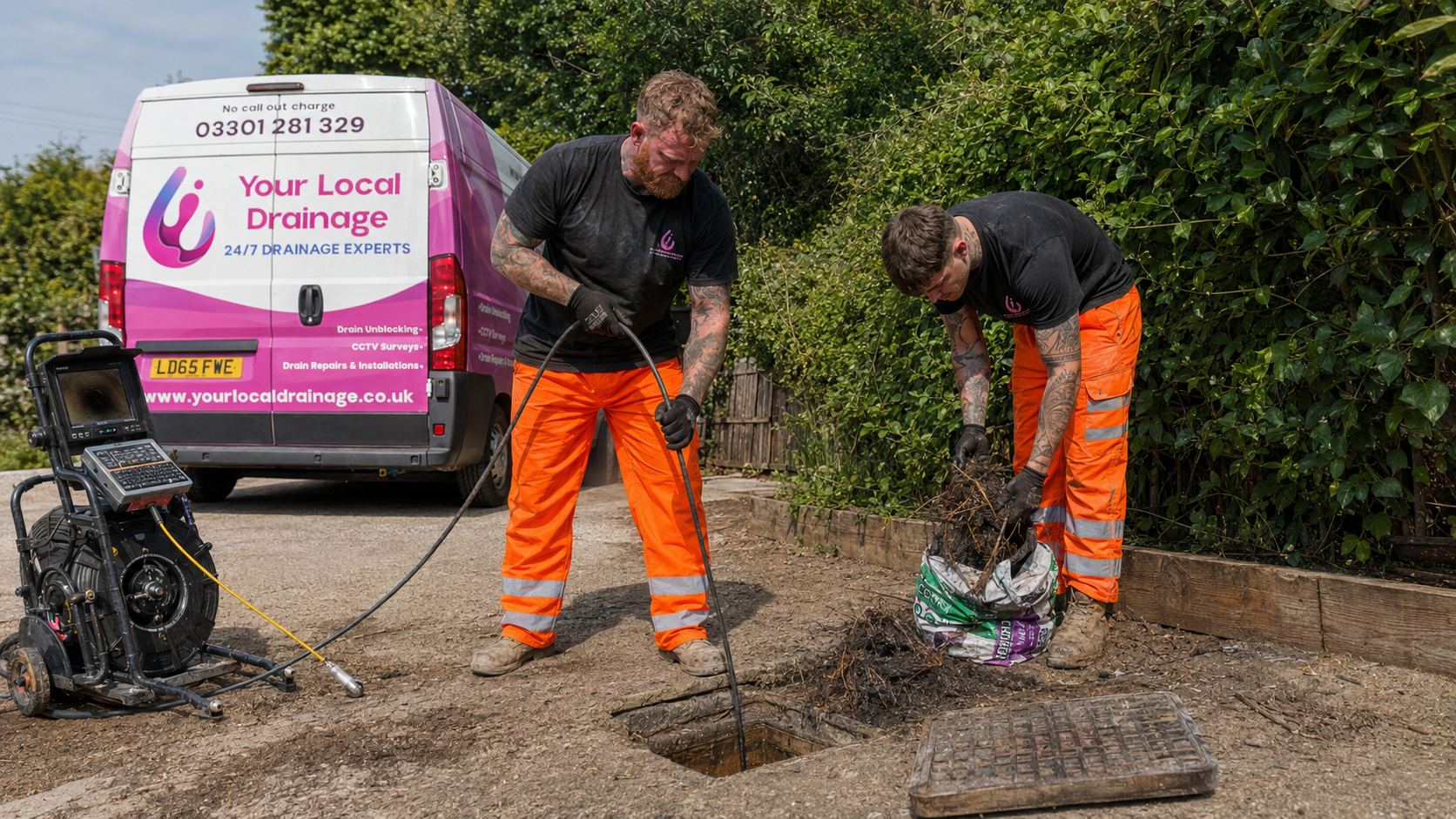
We pass a camera through the drain before cutting anything. This shows us where the root mass is, how extensive it is, and what condition the pipe is in, which removal method is right and whether the pipe will need relining after.
2.
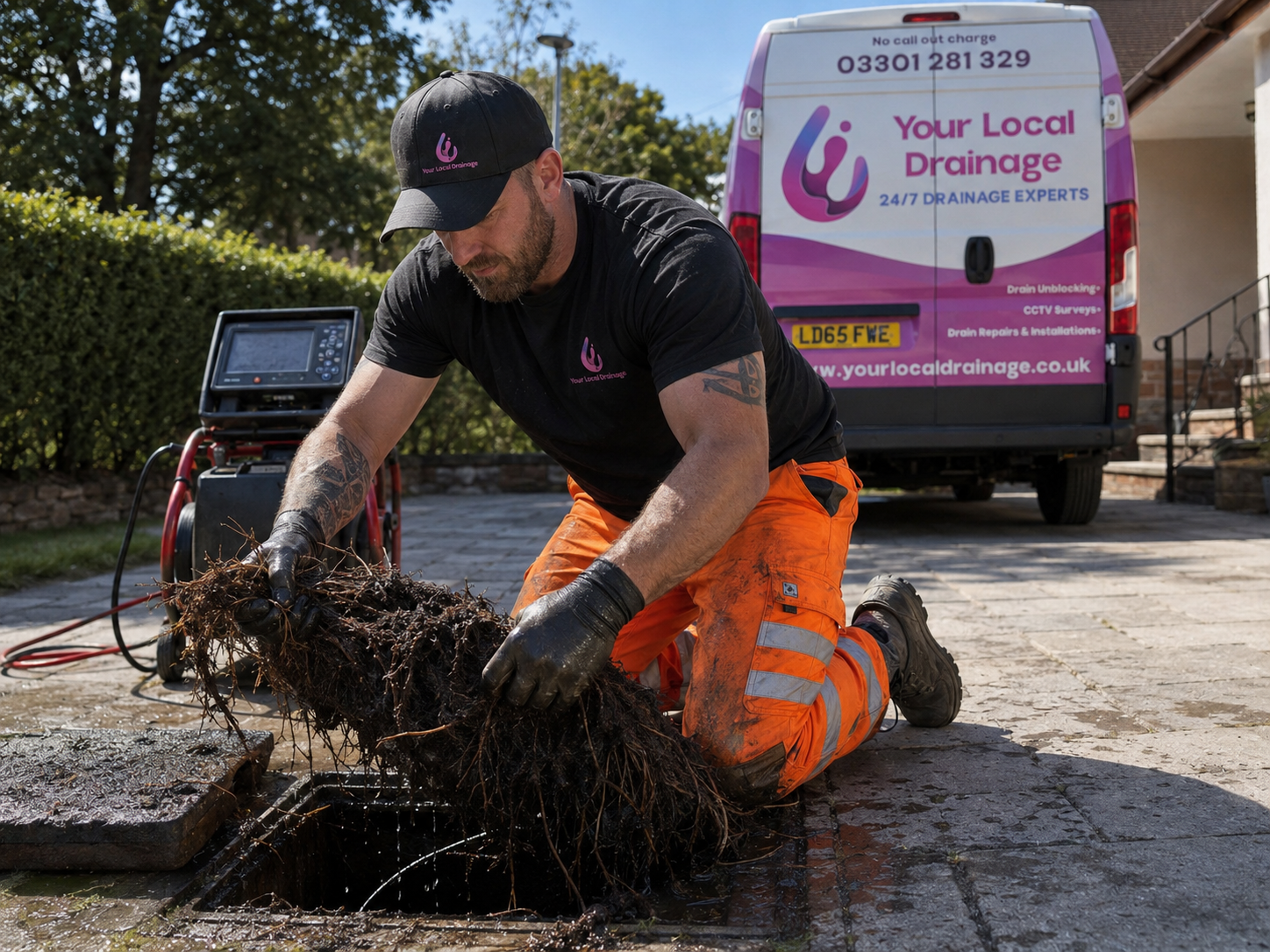
Root cutting and removal
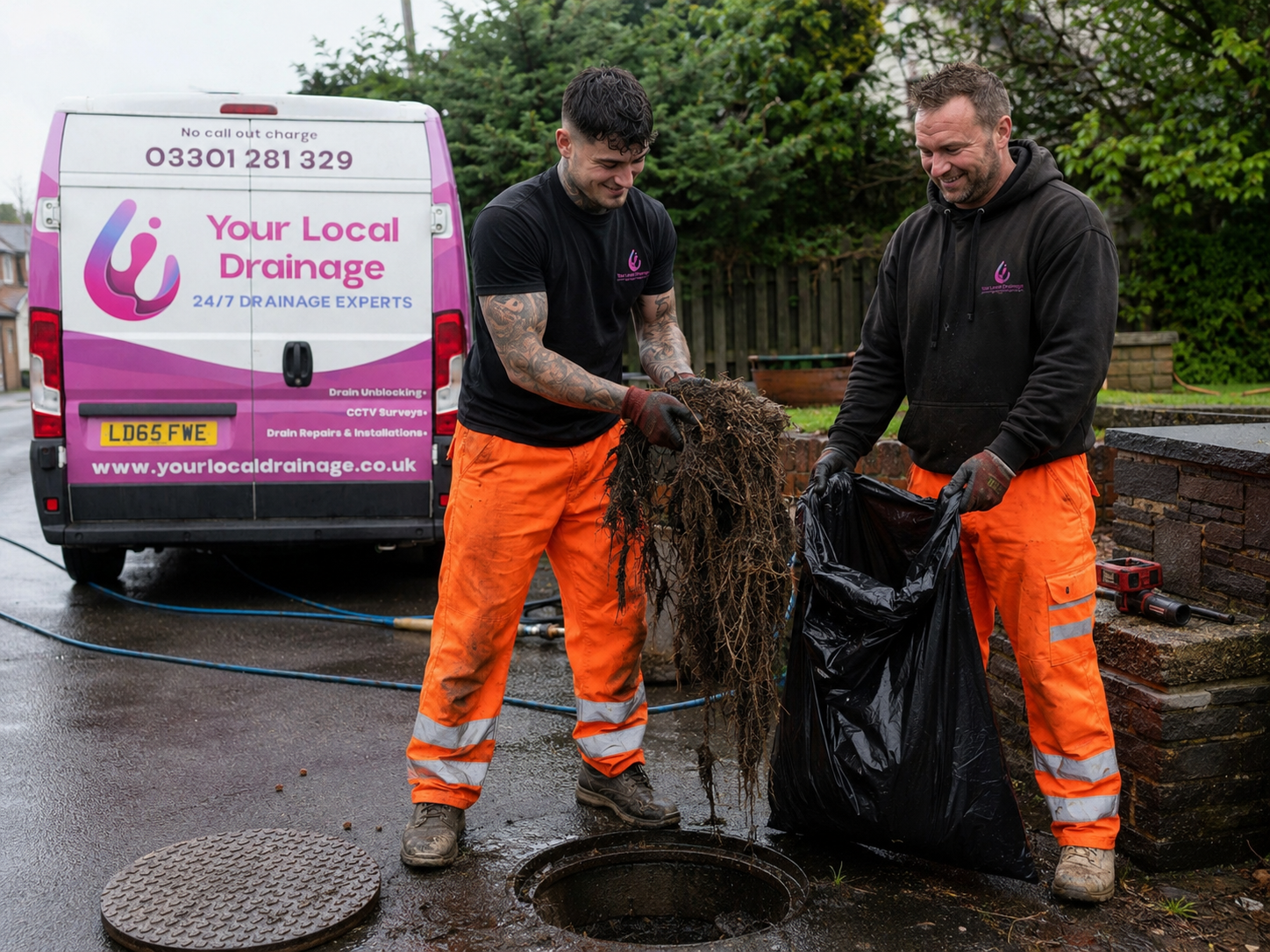
We use a high-speed root cutting head on a jetting unit to cut through the root mass. For heavier intrusions, mechanical cutting equipment is used to extract the mass rather than just fragmenting it.
3.
Post-clearance CCTV survey
After the root mass is removed, we pass the camera through again to confirm the pipe is clear and to assess the pipe condition at the entry points. This is the step most drainage companies skip.
4.
Relining where required
If the root entry point is a crack or damaged joint, jetting it clear doesn't close it. We reline the affected section to seal the entry point and restore the pipe's structural integrity.
Why Root Blockages Keep Coming Back
If you've had a drain cleared for root intrusion and it blocked again within months, you're not unlucky, you're dealing with a predictable problem that wasn't fully resolved the first time.
Cutting the root mass removes the blockage. It doesn't remove the root system, which continues to grow and will find the same entry point again. Sealing that entry point through pipe relining is the step that breaks the cycle.
Coverage
We're based in Bournemouth and cover a wide area across England and Wales.
Core Areas
Emergency & Planned Work
Dorset - BH, DT
Hampshire - SO, PO
Wiltshire - SP, SN, BA
Somerset- BA, TA
Berkshire - RG, SL
Extended Area
Emergency & Planned Work
Oxfordshire - OX
Surrey - GU, RH
West Sussex - PO, BN
Devon - EX
Monmouthshire - NP
Warwickshire - CV
South Wales - NP, CF
Buckinghamshire - MK, HP
Worcestershire - WR
Cheshire - SK, CW
Further Reach
Planned Work
Gloucestershire - GL
Herefordshire - HR
East Sussex - BN, TN
Northamptonshire - NN
Bedfordshire - LU, MK
Hertfordshire - AL, WD
Gtr Manchester - M, SK
Merseyside - L, CH
Not sure if you're covered?
Call 0330 128 1329 with your postcode — we'll tell you straight away.
FAQS
Root Removal — Common Questions
How much does drain root removal cost?
Do I need to remove the tree to stop roots coming back?
Not necessarily. Removing a large established tree can create other problems. Sealing the drain entry point through relining is usually the more practical long-term solution — roots can't re-enter a properly sealed pipe.
Will root removal damage my pipes?
The cutting equipment is designed to remove root material without damaging the pipe walls. A CCTV survey before cutting confirms the pipe condition and identifies any areas where we need to work carefully.
Can roots come back after removal?
Yes, if the entry point isn't sealed. Cutting the root mass removes the blockage — it doesn't stop new growth finding the same crack or joint. Relining the affected section is the most reliable way to prevent recurrence.
How long does drain root removal take?
Most residential root removal jobs — survey, cutting, post-clearance survey — are completed in a half to full day. Relining as a follow-up is usually scheduled as a separate visit.
Is root intrusion covered by home insurance?
Sometimes — depending on the policy. We can provide a written report from the CCTV survey documenting the intrusion and pipe condition, which is useful for an insurance claim.